
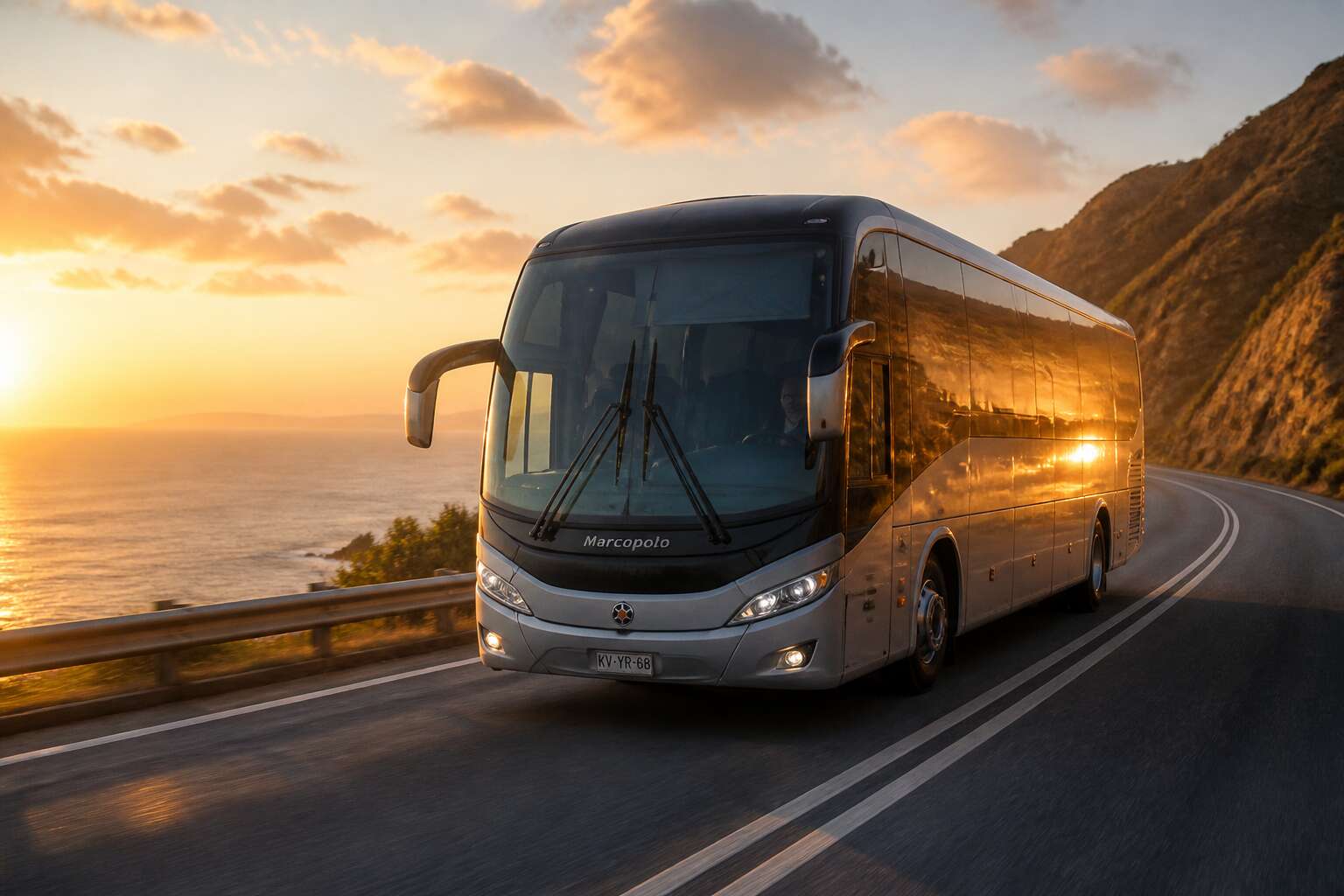
The Appeal of Authentic Bus Travel Photography
Why raw, unposed moments resonate more than staged travel shots
A bus window compresses life into a single frame, one that staged travel shoots rarely respect. On South Africa’s long distance coaches, the real images live in the grit: the dust on a window sill, the conductor’s worn fingers counting change, a passenger sleeping against a cooler box. These raw moments carry weight because they are unmediated.
For a genuine bus travel pic real, you need patience, not props. The best photographs happen when no one performs for the camera. I have found that the ordinary details hold the most truth. Consider what stands out in an honest shot:
- faded seat fabric with historical coffee stains
- a plastic bag swinging from a luggage rack
- the driver’s gloved hand resting on the gear lever
Staged images look clean. They also look dead. Authentic bus travel photography does not polish the scene. It leaves the smudge on the lens and still calls it good work.
The contrast between curated travel influencers and the real bus experience
Every long distance coach in South Africa carries a hundred small stories that never make it to Instagram. The appeal of authentic bus travel photography sits in that silence, in the space between what influencers stage and what actually happens on the N1 at dusk. A bus travel pic real lives in that space.
The curated version of bus travel shows crisp backpacks and perfect window light. The real version shows a tired salesman loosening his tie, a grandmother unwrapping a warm vetkoek, a teenager with earphones who has fallen asleep on a stranger’s shoulder. I have taken both kinds of photographs. The honest ones are the ones I keep.
A genuine bus travel pic real captures:
- The half-eaten sandwich resting on an empty seat
- The window crank that does not quite close
- The route map above the door, faded and peeling
No filter can add the weight of these details. They arrive already complete!
Defining visual authenticity in the context of ground travel
The smudge on the window is the first thing I notice. It is not a flaw. It is the physical record of travel. Visual authenticity in ground travel means embracing verisimilitude, not perfection. The cracked vinyl, the faded route map, and the grime in the seams; these are the markers.
I look for the geometry of the ordinary. The way a passenger’s shadow stretches across the aisle. The unglamorous glare of overhead tubes. A bus travel pic real earns its name when it captures the sag of a seatback, the wear of a stanchion.
Consider the elements that ground a photograph in reality:
- The plastic bottle under a seat.
- The condensation trail on a cold can.
- The worn shiny spot on a handrail.
These details are the currency of the genuine. They need no explanation! A bus travel pic real is a record of the unstageable, the small evidence that a journey actually happened.
Preparing for the Journey: Gear and Mindset for Real Bus Travel Pics
Selecting a compact camera that works in tight, moving spaces
Getting a bus travel pic real starts before you board. Compact mirrorless cameras with mechanical stabilization work best in the confined, jolting space of a minibus taxi. You need something you can operate one handed while holding a rail.
For the South African commuter route, practical gear choices include:
- a 35mm equivalent lens for tight interiors
- a tilting screen for awkward angles
- a silent shutter mode to avoid attention
The mindset is separate from the equipment. You accept that most frames will fail. A good bus travel pic real is often slightly crooked, slightly grainy, and all the more honest for it. When you stop chasing perfection, the cabin opens up.
Smartphone settings for capturing crisp images through tinted windows
A smartphone shot through tinted glass needs deliberate handling. Tap to focus on the brightest patch of window, then pull the exposure slider down half a stop. The interior fades, the road outside sharpens. A bus travel pic real emerges from that small adjustment.
Switch HDR off. Tinted windows already compress the dynamic range; the processing adds a flat, grey wash.
The usual settings to touch before boarding:
- Focus lock on the glass, not the moving world behind it
- Exposure compensation at minus 0.7 for the window cast
- Burst mode on, because the best frame arrives unannounced
Press the phone flat against the pane. Smudges turn into texture, reflections layer over the scene. The bus travel pic real is the glass and the road negotiating with each other. Lean into the sway and shoot with it.
Packing strategies for photographers on long-distance bus routes
A nine hour bus trip from Cape Town to Upington can drain the patience. Everything depends on what sits within arm’s reach. I learned this the hard way, with a camera body buried deep in overhead storage while the light turned gold outside my window.
Packing for the road is a discipline of restraint:
- A compact prime lens instead of a zoom
- A neck strap that locks securely
- A cloth for the condensation that collects on window glass
- A spare battery kept close to body heat
That is the whole kit. The mindset matters more. Board with an open itinerary and a closed mouth. Watch the passengers, the dust roads, the kiosk stops. The bus travel pic real emerges from this state of attention, not from chasing it. I have learned to let the journey set the pace. When the bus pulls away, the camera stays on my lap.
Mental preparation for unpredictable moments and fast-changing scenes
Every bus travel pic real begins in the mind before it touches the sensor. On a long-distance coach from Cape Town to Upington, I watch the scene shift without warning. A vendor at a rank, a child waving through a window, a passenger asleep against the glass. You cannot stage these moments. You can only remain ready.
Keep expectations loose. The light through a dusty window at 6am behaves differently than at 4pm. Notice the rhythms. The bus slows at a toll gate, passengers shuffle, a cellphone rings. That moment is yours.
- The best frame often surfaces as you lower the camera.
- Faces in the aisle move faster than the landscape.
- Every stop resets the light through the window.
Your mood shapes the outcome more than any lens setting. I board annoyed and the photos carry that weight. I board curious and the bus travel pic real reflects it. Let the delays join the story.
Mastering In-The-Moment Shooting Techniques
Composing dynamic window-side shots without glare or reflections
Every window on a moving bus is a reflection trap. On a long haul between Durban and Gqeberha, I watched a passenger fight for ten minutes with his own silhouette before giving up. For anyone chasing bus travel pic real, the first hurdle is learning to work with the glass, not against it.
Press the lens hood directly against the window. That contact kills most interior reflections instantly. For side glare, cup one hand around the lens barrel. It is crude, but it works! Then wait for the bus to pass through shade, a bridge overpass or a roadside tree line, and the glass turns into a clear frame.
For dynamic compositions, pick a subject close to the window, a fence post, a roadside stall, and let the landscape blur behind it. The contrast creates movement without motion blur on your main subject.
Ethical and candid approaches to photographing fellow passengers
On a Greyhound between Johannesburg and Polokwane, I once saw a woman sleep with her mouth open, and for a split second, she was the most authentic traveler I have ever seen. I did not take the photo. That restraint defines the line between candid and creepy. For anyone chasing bus travel pic real, the ethical approach starts with observation, not capture.
When you lower your camera, you notice the signals. A passenger who keeps glancing up is offering silent permission. A passenger who pulls their bag closer is closing the door. A passenger who smiles after eye contact invites a frame. These cues matter more than any setting on your phone.
- Headphones in and eyes shut means a hard no.
- A quick look at your lens followed by a nod means yes.
- Turning toward the window is a graceful refusal.
The best in-the-moment shots happen when you treat the bus as a social space, not a zoo. You sit, you wait, you ask with your eyes. If the answer is no, you move on. If the answer is yes, you get a portrait that carries the entire journey with it. That is bus travel pic real, captured without a single word.
Leveraging motion, speed, and passing landscapes for creative effect
The bus’s motion reshapes every scene outside the window. A shutter speed of 1/15th blurs the scrubland into colour. At 1/500th, a heron stays sharp against the moving ground. For bus travel pic real, match the shutter to what you want the road to do. Brace your forearms against the seat back and hold the camera low.
Read the landscape as it approaches. A distant tree gives a second of clarity before the window frame crosses it. A truck overtakes in a blur of red.
- Pan with a roadside pole to keep it crisp while the background streams.
- Use a high shutter speed on straight flat routes.
- Lower the shutter speed when the bus enters a town.
That overtaking moment is when speed matters most. Each technique turns motion into a controllable element. This is bus travel pic real, where the journey becomes the subject.
Overcoming low-light challenges on overnight or twilight bus rides
A single streetlamp through a bus window at 11pm holds more story than a studio portrait. But capturing that story demands a different approach than daylight shooting. The bus’s interior fluorescents and passing headlights create mixed colour temperatures, so set a custom white balance on the tinted glass.
Keep your camera braced against the seatback and let the shutter drop to 1/30th. At twilight, raise the ISO to 1600 or 3200; I’ve found modern sensors handle noise better than you expect. The point is to accept some grain as part of the texture. Bus travel pic real means embracing that gritty quality!
Using continuous shooting mode to capture fleeting expressions and scenery
The shutter chatters like a heartbeat when I hold down the burst button. On a bus, every scene is a fleeting negotiation between speed and light, so continuous shooting mode becomes my only honest companion. I fire off a sequence when the bus brakes for a pothole or when a hawker’s silhouette catches the sunset through the windshield. Some frames miss entirely, but one might hold the exact tilt of a head or the dust rising from gravel.
- Anticipate the sway, then press before the moment peaks.
- Lock focus on the window frame and let the background blur.
- Shoot in short bursts, not endless streams.
This approach uncovers the grit that a single exposure would lose. Bus travel pic real demands that you embrace the chaos of motion. I once captured a child’s laugh across three frames, each one a fragment, together telling the whole story.
Post-Production and Sharing Your Authentic Bus Travel Story
Minimalist editing techniques that preserve the rawness of the original photo
Most photographers overprocess. A single slider can strip the grit from a bus travel pic real. I edit with two moves: exposure and crop. That’s it. The dust on the lens stays. The window reflection stays. That smudge of hand sanitizer on the glass? It stays too. Authenticity lives in those flaws.
When sharing, I resist flattening contrast or boosting saturation. Let the midday Karoo light burn harsh. Let the night bus blur stay grainy! My audience wants the truth, not a postcard. So I export at original resolution. A simple caption with location and time. Then post. No filters. No presets. Just the frame I captured. That’s how trust builds.
Building a narrative sequence from a single bus journey
The true work begins after the bus pulls away. I review every frame and look for the thread. One image of a dusty window at dawn, another of a passenger’s hands resting on a bag, a third of the road bending toward the horizon. Together they form a narrative arc no single shot can carry.
I arrange them in the order the journey unfolded. The departure, the middle hours, the arrival. Each picture earns its place. The bus travel pic real emerges from this sequence, not from any one perfect frame.
- Start with dawn light on glass
- Follow with quiet hours between towns
- End with the dust settling at arrival
Sharing means presenting the sequence as a single story. I post the images together, captions brief, with only the location and time. The viewer moves through the journey as I did, seeing the dust and the light in equal measure.
Best platforms and formats for sharing real travel photography
Post-production is where most authenticity dies, quietly, under a thousand tiny adjustments. I keep my edits surgical: exposure, white balance, a slight crop for the horizon. If a shot feels honest, it gets published with its flaws intact. The bus travel pic real lives in that restraint. A dusty lens flare or a blurred hand becomes the story’s texture.
Sharing demands the right vessel. I use Instagram carousels and a simple photo blog for longer sequences. Both support the swipe rhythm that mirrors a journey.
– Instagram carousel for 5 to 7 frames
– Flickr album for high resolution, no compression
– A personal blog with location and time only
Avoid heavy filters on any platform. The bus travel pic real survives when the viewer can trust the light. Choose formats that respect the original file.
0 Comments