
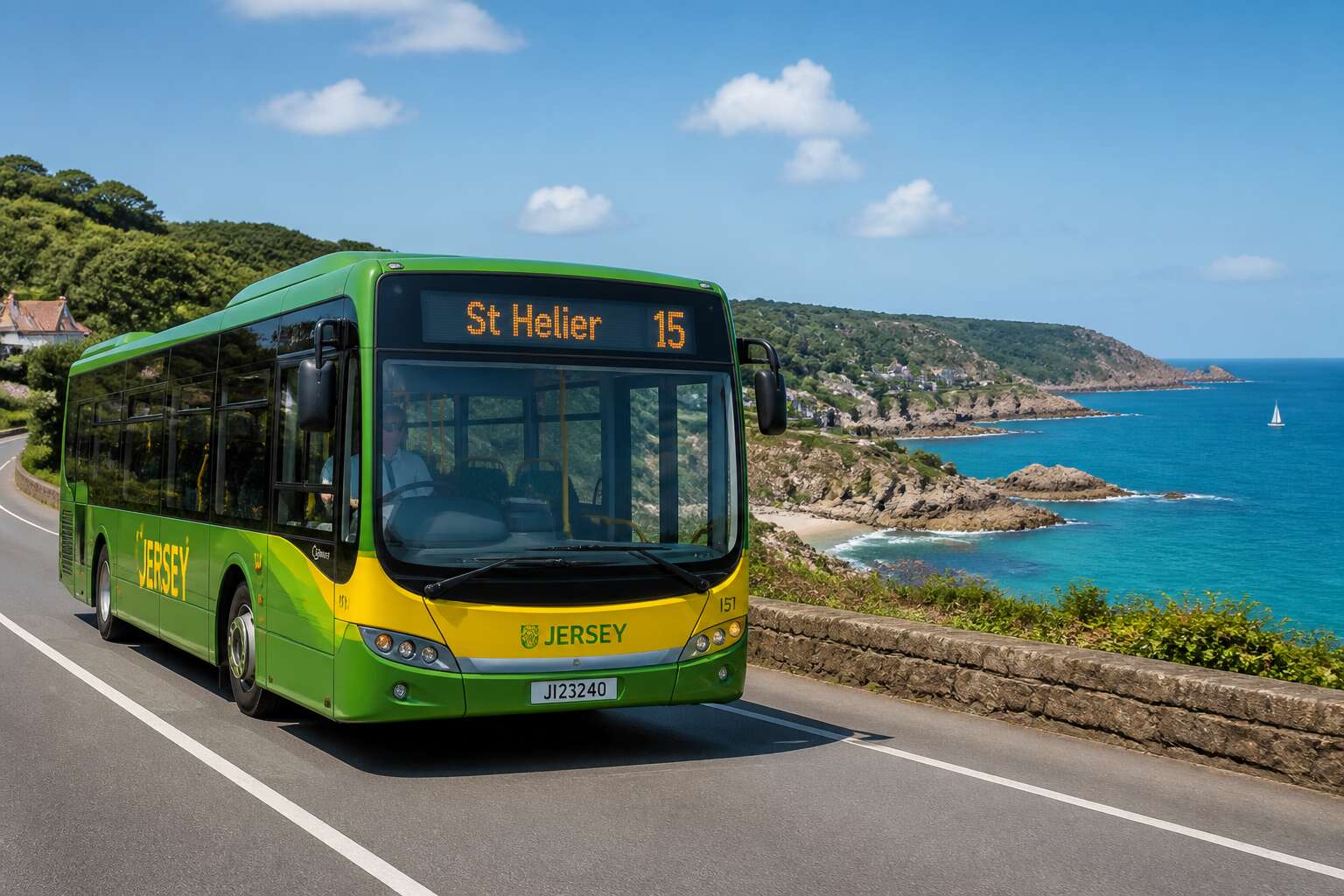
Understanding the Island’s Bus Network
Key Operators and Their Coverage
Jersey’s bus network runs on a surprisingly simple system. A single operator, LibertyBus, controls nearly all routes on the island. Their coverage stretches from St Helier’s central station to coastal villages and inland parishes. Route numbering follows a pattern:
- Routes 1 to 15 serve the east and south
- Routes 20 to 28 cover the west
- Route 15A connects the airport
A day pass costs around £12 for unlimited travel, and the network links directly with ferries at St Helier Harbour. That makes bus travel on jersey practical for day trips. Frequencies vary widely, with some routes running every 20 minutes and others hourly. Evening services are limited, especially outside summer, which catches many visitors off guard. I found the island’s small geography works in your favour, as no journey exceeds an hour. Bus travel on jersey suits those who plan around the timetable, and the coverage across the island remains reliable.
Popular Routes for Tourists
Most visitors see only the station and the seafront, but that misses the point. Bus travel on jersey works best when you treat every route as a discovery line. The eastern Route 3 runs to Gorey Castle, set on a rocky outcrop above the harbour. Route 12 follows the southwest coast, offering ridge views over St Brelade’s Bay before dropping to the sand. Route 5 turns inland, slicing through parish lanes that rarely appear on postcards. These paths reward a slower eye. No express service exists, and that is the appeal. A short list helps:
- Route 3 for the castle and harbour
- Route 12 for coastal cliffs and beach access
- Route 21 for quiet rural valleys
The northern Route 21 comes rarely outside summer, so check the schedule. Bus travel on jersey demands that kind of attention. Give it, and the island turns intimate, one stop at a time.
Operating Hours and Frequency
Timing shapes everything on a small island. The buses here run on a timetable that breathes with the seasons, not a rigid urban rhythm. Most routes operate from early morning until around 11 PM in summer, but services shrink significantly after 7 PM during the darker winter months. Sunday schedules are drastically reduced, often requiring careful planning for a return trip.
Frequency varies by corridor. Core routes like the 1 and 15 run every fifteen minutes during peak hours, while rural routes might only pass once an hour. A printed timetable does not capture the weather delays that coastal winds can cause. The network relies on a handful of central hubs, where many routes converge for a few minutes to allow transfers, then depart simultaneously.
- Check the last bus times at your stop, not the station
- Allow a 10 minute buffer for connections at major interchanges
- Download the official app for real time tracking, as paper schedules lag behind
You will notice that after 6 PM, many buses operate on a demand responsive basis on certain lines. The driver may skip a stop entirely if no one rings the bell. Standing at a visible point helps, but a raised hand is the universal signal here. Bus travel on jersey rewards the patient traveler who understands that the printed times are a starting point, not a promise. The gaps between buses change with the seasons, so always glance at the electronic board at Liberation Station before wandering off. These boards show live departures that often differ from the day’s printed guide by several minutes, especially when a double decker is running late due to narrow lane traffic.
Tickets, Fares, and Money-Saving Passes
Single and Return Fares Explained
Many visitors are surprised to learn that the island’s network, while compact, covers every corner of Jersey with remarkable efficiency. The cost of bus travel on Jersey depends on whether you pay in cash or use a pre-purchased card, and the difference can be substantial.
A single cash fare is straightforward, but a return ticket often costs only slightly more than a single. You buy these directly from the driver, and exact change is appreciated though larger notes are accepted. However, the real savings appear when you use the avantage card. Frequent riders should consider this method, as capped daily charges prevent your travel costs from spiraling.
– The avantage card offers a discounted fare per journey.
– A daily cap ensures you never pay more than a set amount.
– A seven-day avantage card provides unlimited travel for a week.
This structure rewards planning. For a short stay, the daily cap is excellent. For a longer visit, the weekly card proves more economical. The return ticket, valid for the driver’s shift, suits those who plan a simple outing. Understanding these options ensures your bus travel on Jersey remains affordable, leaving more in your pocket for the island’s excellent seafood.
Day and Multi-Day Explorer Passes
For those who prefer their bus travel on Jersey to resemble a flexible itinerary, the Explorer Passes are the key. Day and multi-day options unlock unlimited rides, which directly bypasses the per journey math. A one day pass costs about the same as four singles, so the heavy riders among us win immediately. The three day pass extends that logic, while the seven day version effectively turns the bus into a personal shuttle.
- One day Explorer Pass for frantic sightseeing.
- Three day Explorer Pass for a leisurely weekend.
- Seven day Explorer Pass for full island saturation.
No tapping, no counting, just flash the paper and board. This simplicity appeals to travelers who find the avantage card too complex. All this ensures the island’s bus network remains a bargain.
Contactless Payment Options
With contactless payments now accounting for over 60% of UK bus transactions, Jersey’s network has fully embraced this swift method. For anyone planning bus travel on Jersey, simply tapping a bank card or smartphone removes the need to carry cash or purchase a physical ticket beforehand. It is a seamless way to board, especially for spontaneous trips where you are unsure of your exact schedule.
The system accepts several payment forms, which are useful to know before you travel:
– Contactless debit and credit cards
– Mobile wallets linked to Apple Pay or Google Pay
– A prepaid travel card that you top up yourself
Here is the clever part of the system for the uninitiated. If you tap the same card multiple times in a single day, the system automatically caps your total charges at the price of a daily Explorer Pass. That amount is what you would pay for a single ticket, so you never lose money by paying as you go. You simply get a full day’s travel without making any upfront commitment. Ensure each passenger uses a distinct card or device, as the cap applies to one card only. Also, remember to check for the contactless symbol before boarding. Most routes accept it, but a few rural services still prefer cash. For the borderless traveler, this method is exceptionally intuitive, and it quietly undercuts the need for any pre-planning. Your bank statement becomes your receipt, and the central computer does all the mathematics for you. It is a frictionless experience that removes all anxiety about having the correct change. In a world where time is precious, this modern convenience ensures that bus travel on jersey remains both a joy and a simplicity. The security protocols are robust, so your financial details remain private throughout the journey.
Group Travel and Family Discounts
Group travel on Jersey’s buses rewards the organised. Assemble four or more passengers and the fare structure tilts in your favour. The operator sells a group return ticket that undercuts the cost of separate singles. Families key into child fares that apply up to age 16, with infants riding free.
- Group rates require everyone to ride together
- Child fares cover ages 5 to 16
- Infants under five travel at no cost
The savings compound on longer routes. A family of two adults and two children often pays less than two adult returns. For bus travel on jersey, the group ticket remains the most effective way to cut costs. Money-saving passes for larger parties exist at the travel office, but they demand a single booking. That small effort delivers meaningful relief.
Practical Tips for Riding the Buses
How to Plan Your Journey with Timetables
Nobody enjoys watching a bus disappear around the bend just as you reach the stop. On Jersey, the printed timetables at shelters are helpful, but the live departure board online is the real key. I have learned to check it before heading out, especially on Sundays when frequency drops. Those extra minutes save you from a long wait in the coastal wind!
When planning bus travel on Jersey, rural routes run less often than the main corridors. The timetable shows the exceptions, and this is the process I follow:
- Find your stop and confirm the route number matches the destination.
- Compare weekday and weekend schedules, as they differ more than most visitors expect.
- Add a five minute buffer for late running after heavy rain.
Narrow roads create delays, so allow flexibility in your schedule. I keep the PDF saved on my phone for offline access, which has rescued me in areas with weak signal.
Accessibility, Strollers, and Large Luggage
I always fold the pushchair before boarding and place it in the buggy zone near the middle door. Drivers lower the ramp for wheelchairs, but you must pull the cord at your stop to give them time. Large items such as suitcases belong under seats or on the floor rack, never in the aisle.
- Keep bags clear of the rear doors
- Hold the handrail when moving from the buggy zone
- Signal the driver if you need extra boarding time
These habits make bus travel on jersey smoother for every passenger!
Boarding Procedures and Local Etiquette
Boarding a bus in Jersey follows a simple rhythm: let passengers alight first, then step up and greet the driver. A quick “good morning” sets the tone. Tap your card or show your pass before moving down the aisle, since the driver needs to confirm payment. I always wait for the doors to fully open before approaching, which avoids that awkward shuffle at the step.
Local etiquette rewards quiet awareness. Seats near the front often get offered to older passengers without a word spoken. Keep phone conversations low, and remove your backpack before standing, a small courtesy that prevents accidental bumps. In busy periods, queuing forms naturally at the stop.
- Wait for exiting passengers before boarding
- Greet the driver and tap your card promptly
- Move to the back if the front section fills
These habits make bus travel on Jersey feel orderly, even when summer crowds peak!
Dealing with Delays and Weather Disruptions
When Atlantic weather sweeps across Jersey, even the most dependable routes yield to nature’s schedule. The island’s network is robust, yet sudden squalls can temporarily suspend ferry connections that buses depend upon at St Helier. I have watched passengers glance skyward during an afternoon shower, their plans shifting with each cloudburst. Patience becomes a practical tool here, one as essential as your ticket.
Savvy travellers monitor the operator’s live feed before leaving their accommodation. The coastal routes, especially those hugging St Aubin’s Bay, experience the most disruption when wind speeds climb. Buses reroute inland, adding fifteen minutes to a journey that normally takes eight.
Preparing for uncertainty transforms frustration into a manageable pause:
– Download the operator’s app for real time alerts
– Carry a light waterproof layer, even on sunny mornings
– Keep a backup route in mind, often the 15 or 22 service
I carry a paperback for unexpected layovers. The bus system, in turn, keeps its own rhythm, updating boards at Liberation Station every few minutes. When delays arrive, they arrive with information attached, a small mercy that turns waiting into part of the experience. Bus travel on Jersey demands flexibility, yet that flexibility reveals a calmer way to move.
Apps and Digital Tools for Live Updates
Your smartphone renders the island’s timetable into something pliable. The official app offers live vehicle tracking, so you watch your bus creep along the route from the comfort of your B&B. Fewer than half of visitors download it before arrival, yet those who do sidestep the guesswork at unsheltered stops.
Digital tools reward a bit of tinkering, and the payoff is immediate. The journey planner compares walking, cycling, and bus options with equal candor. Stops display QR codes that load real-time departures without an account.
- Enable push notifications for service changes
- Save your frequent stops as favorites
- Check the live map during boarding to confirm your ride
This level of granularity makes bus travel on Jersey feel less like a concession and more like a choice.
Scenic Routes Worth Taking
Linking Historic Sites and Museums
The island’s bus network threads through cliffside lanes where the Atlantic salt spray meets ancient granite. One route connects La Hougue Bie museum to the Maritime Museum, passing the Neolithic passage grave before easing toward St Aubin’s Harbour.
Another climbs to the Channel Islands Military Museum, and I always appreciate the view! For bus travel on jersey, these journeys offer direct access to layers of history. The number 15 links Mont Orgueil Castle with the German Underground Hospital, a straightforward crossing of centuries. Some passengers disembark for Elizabeth Castle, then reboard for the Jersey Museum. A short list of unmissable stops:
- La Hougue Bie and its chapel
- The Occupation Tapestry Gallery
- Hamptonne Country Life Museum
The ride itself becomes the narrative, each bend revealing a fortification or a smuggler’s cove. Every ticket purchases a timeline, a benefit of bus travel on jersey.
Seasonal Services and Summer Only Lines
Jersey’s bus network changes with the seasons. The winter schedule trims routes to essentials, but summer brings an entirely different geography. For those planning bus travel on Jersey, the seasonal services are the true reward.
Route 12A hugs the north coast from St Helier to Bonne Nuit, where the road narrows above the bay. It runs only from May to September. The summer-only 15A heads to the eastern headlands, passing wild asparagus fields before dropping at Archirondel Tower. I took it last August and watched the tide claim the causeway!
- Summer lines worth chasing: 12A to Bonne Nuit
- 15A to Archirondel Tower
- 23 to St Catherine’s Breakwater
These routes vanish after the equinox, leaving only the permanent grid. That ephemerality makes each ride feel like a secret. For bus travel on Jersey, catching a summer-only line is a matter of timing, not just destination.
Connecting Buses with Other Transport
Getting to and from the Airport
Most visitors overlook the airport bus stop, yet it is the key connection for the entire network. The number 15 shuttle departs every half hour, linking the terminal directly to St Helier’s bus station. Experienced travellers know this is the smartest way to start a trip. But what if you need another mode? That is where the interchange becomes vital. Below the arrivals hall, you will find:
- a dedicated taxi rank
- car hire desks
- bicycle lockers
Even the ferry terminal connects through the same ticketing system. For those arriving late, a taxi costs roughly £25. The bus fare is only £2.40. You can buy tickets at the machine or tap your card. This seamless transfer makes bus travel on jersey genuinely practical. I always tell first timers: land, walk left, and board the next bus!
Working with Taxis and Rideshare Services
Every evening, the taxi rank outside Liberation Station fills up before the last bus departs. This timing is intentional. Jersey’s transport planners placed bus, taxi, and rideshare services so they converge in one shared interchange. A passenger arriving at 21:45 can reach a waiting cab without crossing a road.
Seamless bus travel on jersey relies on three connections:
- Buses cover the main corridors between St Helier and the parishes.
- Taxis reach cliff paths and farm stays beyond fixed routes.
- Rideshare apps serve passengers who miss a connection or need immediate departure.
This layered system is the reason bus travel on jersey suits visitors who usually hire cars. The network does not force a single choice. A fare of £2.40 versus a £15 taxi ride comes down to time, distance, and weather. Frequent travellers read the timetables and know when to swap.
Bike Racks and Pedestrian Linkages
Jersey’s bus network doesn’t end at the roadside. Green lanes and coastal paths begin where the bus stops, and many travellers carry folding bikes or hire cycles from St Helier. Racks on the front of most buses accept two bicycles, though space runs quickly on summer mornings! Pedestrian linkages matter too, especially at Gorey Pier or St Aubin’s Harbour, where a five minute walk connects the bus shelter to the ferry slipway or the cliff path.
For bus travel on jersey, combining modes extends your reach without adding a car. Consider a few connections:
- Route 15 to Rozel Bay, then the headland walk to the lighthouse
- Route 22 to the airport, then the dune path to St Ouen’s beach
- Route 3 to St Catherine’s Woods, then the footpath to the old railway track
These transfers unlock parts of the island that fixed routes cannot reach. Bus travel on jersey becomes a mix of riding and walking, and that mix rewards those who plan a little. The number 22 serves the airport directly, but the walking route through the sand dunes offers a quieter arrival. A small map at every stop shows which footpaths link to nearby attractions.
Day Trips to Neighboring Parishes
A single parish day trip often ends where it starts. Combining bus travel on jersey with a second mode turns it into a circuit. The summer water taxi from St Aubin to St Helier shortens the coastal run, and the bus timetable at St Aubin’s harbour lines up with its morning departures. Ride the 12 out, come back by boat, and the parish boundaries feel like a proper itinerary.
The heritage railway at Pallot runs a few afternoons each week. The adjacent 14 bus stop connects it to St Peter’s Village without a long wait. Good combinations for neighbouring parish days include:
- Number 12 to St Aubin, water taxi to St Helier, then the 3 to St Martin
- Number 14 to Pallot, steam train ride, then the 8 to St John
Arranging the return leg on a different mode keeps each parish visit distinct.
Cruise Ship Passenger Tips
Cruise ship passengers stepping onto the St Helier quayside rarely realize how close the Weighbridge terminus lies. A five minute walk from the berth brings you to the main departure point, and bus travel on jersey becomes the simplest way to stretch beyond the harbour cafes while the ship is moored. The morning shore leave window aligns neatly with the first wave of departures, so checking the timetable before breakfast pays off.
Some visitors find the island’s layout easier to grasp by taking a numbered service to a landmark, then returning on a different line. The harbour information desk carries a laminated route map for quick orientation.
- Confirm the last bus back to St Helier before boarding the 14 or 15
- Keep a few pound coins separate from your card
- Tell the driver your destination when paying
The full loop, from quay to parish and back, fits within most itineraries.
Multi-Modal Travel for Commuters
Commuters pair a cycle ride with the morning bus, leaving the bike at racks near the Weighbridge. The interchange at Liberation Station connects local routes with the ferry pier, so a worker arriving by sea can board within minutes. Bus travel on Jersey rewards those who check the live departure board before leaving the office.
For split journeys, remember the fare structure. A single ticket covers one route, while a return suits the daily commute. If you drive to the interchange, the car park sits directly opposite the stand.
Timing matters:
1. Aim to reach the stop five minutes early.
2. Confirm the last bus on the app or the evening paper.
3. Keep your Explorer Pass visible for the driver.
Shifting between modes becomes less stressful when the terminus sits beside the cycle path and the ferry terminal. Bus travel on Jersey remains essential for the commuter network.



0 Comments