
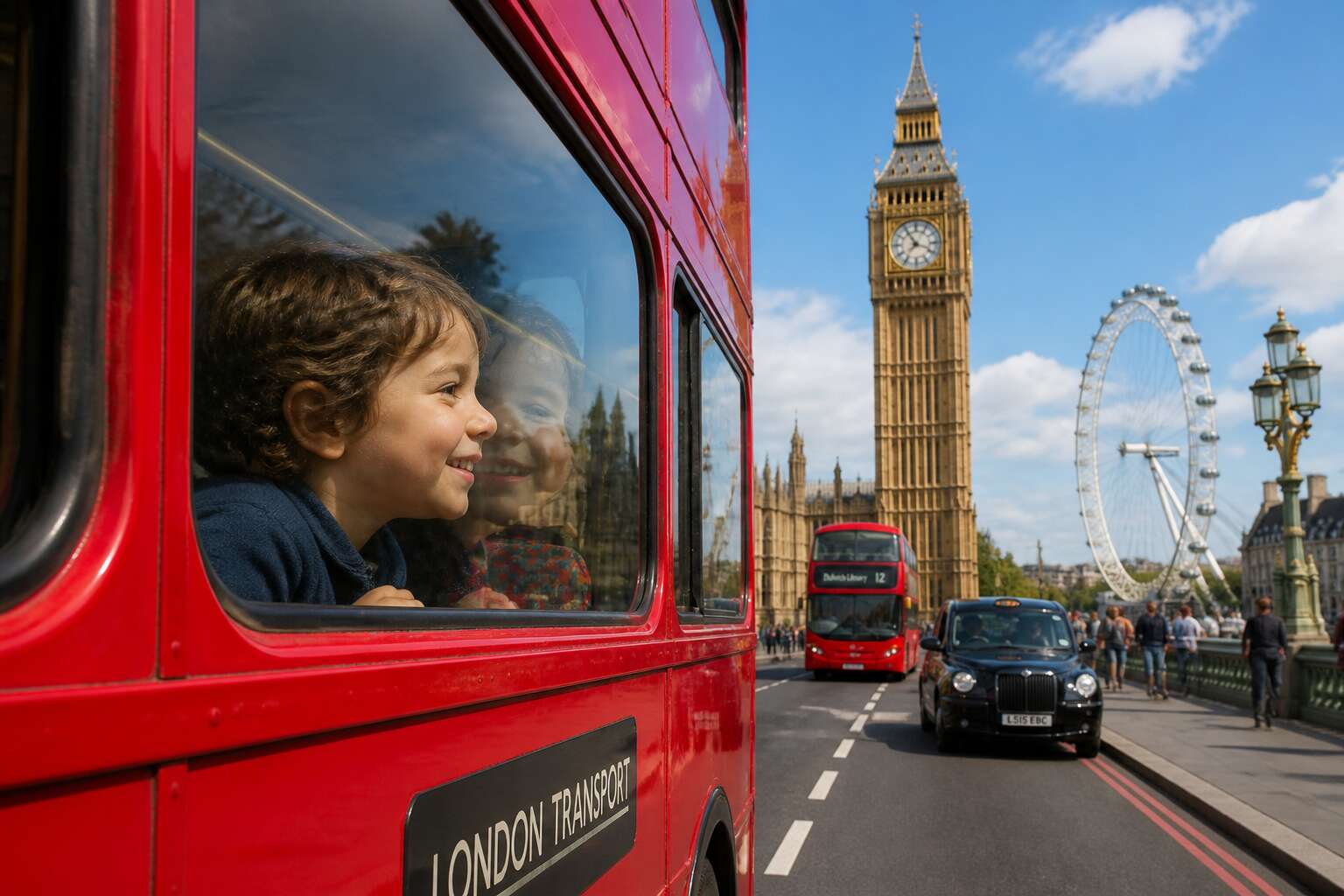
Why Bus Travel is Great for Kids in London
Affordable Family Adventures: Saving on Transport Costs
London’s iconic red double-deckers are more than just a mode of transport; they are a rolling adventure for children. For families exploring the capital, bus travel offers a front-row seat to the city’s vibrant street life without the stress of navigating the Underground’s crowded corridors. It transforms a simple journey from A to B into an engaging sightseeing tour, where every corner turns up a new landmark or a bustling market square.
The financial benefits are substantial for parents. Compared to the cost of train tickets or ride-hailing apps, the bus network provides an affordable way to cover significant ground. Kids under 11 travel completely free on London buses, making it an economical choice for a family day out. This allows you to allocate more of your budget to attractions and meals, rather than transport.
Beyond the savings, there is a unique educational value in taking the bus. It provides children with a tangible sense of the city’s geography, helping them understand how different neighborhoods connect. Here are a few reasons why it works so well:
– Flexibility: You can hop on and off, allowing for spontaneous exploration of parks or shops that catch your eye.
– Scenic Routes: The upper deck offers a panoramic view that is impossible from a car or tube train.
– No Time Pressure: Unlike trains, you don’t have to stress about missing a specific departure time.
While it might be slower than the tube for long distances, the journey itself becomes the entertainment. The gentle hum of the engine, the friendly “mind the gap” announcements, and the ever-changing scenery keep young minds engaged. For a family looking to create lasting memories without breaking the bank, the humble bus is the ultimate chariot.
Scenic Views from the Top Deck: A Moving Sightseeing Tour
The upper deck of a London bus offers a cinematic view that no underground tunnel can replicate. For a child, the city unfolds from above, turning a simple commute into a moving observation deck. This elevated perspective turns landmarks into a live storyboard, where the Thames appears and disappears between historic facades and modern glass towers. It is an unstructured tour that requires no headphones, no queuing, and no fixed itinerary.
Seeing the city from this height also helps children develop a mental map of London. They begin to understand spatial relationships in a way that is impossible from the cramped, windowless Tube.
– Unobstructed Views: Perched high above street level, you bypass crowds and hedges that block the view at ground level.
– Real-Time Learning: Kids connect neighborhoods to the streets they see, building a tangible sense of place.
– Spontaneous Fun: The freedom to leap off when a park or market looks interesting keeps the day fluid and exciting.
For parents, this means the journey itself becomes the attraction. Bus travel London children benefit from a perspective that turns the city into an interactive guide, providing a rich, memorable experience that is as educational as it is entertaining. The gentle rhythm of the ride offers a perfect break for little legs, making it a smart choice for any family itinerary.
Stress-Free vs. Tube Crowds: More Space and Flexibility
Few experiences test a family’s patience like the cramped confines of a Tube carriage during peak hours. The stress of managing small bodies, a folded pushchair, and a bag of snacks while passengers press in from all sides is a familiar ordeal. Bus travel London children offers a reprieve from this scrum, providing a seated, spacious environment that allows the family to breathe. The lower deck often has open areas for a stroller, and there is no need to navigate escalators or narrow corridors to reach the platform.
The flexibility extends beyond the physical space. You can flag a bus down from the pavement and hop off between official stops, a feature that proves invaluable when little legs suddenly refuse to carry on. This adaptable approach removes the pressure of a fixed schedulechers, allowing you to linger at a cafe or take a detour to a playground without worrying about missing the next connection. The journey becomes part of the day’s flow rather than a frantic dash between destinations. This ease of movement is a profound difference, turning transit into a calm interlude where the city slowly passes by the window at a pace suited for young eyes.
Educational Value: Learning About the City and Public Transport
London is a living classroom, and the humble bus is its most accessible textbook. For a child, the city unfolds in a way that a sealed underground tunnel simply cannot replicate. The high vantage point of an upper deck turns a routine journey into a dramatic exploration of rooflines, street performers, and the intricate ballet of traffic. It is here that bus travel London children experience geography as a tangible reality, learning how neighborhoods connect and how the Thames weaves the city together.
This perspective offers a unique form of active learning. It encourages observation and prompts endless questions. Why is that building shaped like a gherkin? Where does that river lead? Each journey becomes a genuine inquiry.
The educational value extends far beyond simple sightseeing. For young minds, understanding the public transport network is a foundational lesson in civic literacy. They see how a city moves, how different districts serve different purposes, and how a complex system operates to serve millions. This is a practical, real-world education that no single tourist attraction can match. To make the most of this, consider stopping at specific points to reinforce spatial awareness:
– Use landmark stops like Tower Hill or Westminster to teach orientation.
– Trace the route on a paper map before boarding to build navigation skills.
– Let your child help press the stop button, giving them a sense of agency.
Rather than rushing from one paid attraction to the next, a bus journey lets the learning happen organically. The experience of seeing a Victorian terrace transition into a modern glass tower provides a chronological lesson in architecture that is rarely taught with such clarity. While a visit to the Science Museum is fantastic, the journey to get there can be equally instructive. The London Transport Museum is a fascinating place, but nothing beats the real thing. By making the journey the destination, you are teaching your child that the city itself is the wonder. This is the true genius of bus travel London children, it turns the mundane act of getting from A to B into a rich, spontaneous and formative experience that builds a deep sense of place.
Planning Your Family Bus Journey
Understanding TfL Fares and Oyster Cards for Children
Planning a family day out in London requires a bit of foresight, especially when little legs are involved. The good news is that bus travel london children is often the most economical and entertaining way to see the city, offering a rolling tour from the comfort of your seat. However, understanding the payment system before you board can save you from a stressful start to your adventure.
Here is the essential guidance for navigating TfL fares with your family. The golden rule is that children under 11 years old travel completely free on all London buses without needing a ticket, which is a fantastic perk for families. For those aged 11 to 15, the landscape changes slightly; they will need an Oyster card or a contactless payment card to secure their discounted rate. It is vital to remember that a child’s Oyster card must be tapped in every time, even though the fare is often lower than the adult rate.
Before you set off, a bit of strategic planning regarding your payment methods can make the journey smoother. If your child is 11 or older, you have a few practical options to consider. You can either purchase a standard Oyster card and ask a member of staff to add a “Young Visitor Discount” to it, or you can link their contactless card to their age. This ensures the system automatically charges the correct child fare, preventing any accidental adult charges that are easy to miss.
To keep the day hassle-free, prepare a small checklist before you leave the house:
– Verify that all Oyster cards have enough credit for the day’s travel.
– Carry a backup contactless card in case of technical issues.
– Double-check the age bracket for your child to ensure you are using the right payment method.
– Remember to bring a jacket, as the iconic open-air platform at the back of the bus can get breezy.
Ultimately, utilising the bus network allows your family to avoid the cramped conditions of the Tube during peak hours. By mastering the simple logic of TfL fares and ensuring your children have the correct Oyster card ready, you transform a simple commute into a memorable sightseeing trip. You can sit back, point out the landmarks, and let the driver handle the navigation while the city unfolds right before your eyes.
Best Times to Travel to Avoid Rush Hour Chaos
What to Bring in Your Diaper Bag or Backpack for Small Kids
When preparing for bus travel london children, the diaper bag becomes your lifeline! A single unexpected delay on the route to Camden or Greenwich turns a simple ride into an expedition, so pack with forensic precision.
- Two absorbent nappies and a travel changing mat.
- A sealed packet of wipes and hand sanitiser gel.
- An extra layer, like a lightweight fleece, for air-conditioned buses.
- A small snack box with crackers and a water bottle with a straw.
- A quiet toy, such as a pull-back car or a fabric book.
These items address the unpredictable rhythm of city traffic. The nappies handle the obvious, but the snack box serves as a distraction during the moment your toddler’s patience thins. Thorough preparation turns a potentially stressful journey into a calm, manageable experience.
Checking Live Bus Arrivals with the TfL App and Bus Stop Signs
The TfL app turns a cold wait into a controlled variable. Bus stop signs count down the minutes to your next ride, and for bus travel london children, that information is gold. A toddler’s patience runs on a short fuse. Knowing the bus arrives in three minutes rather than thirteen reshapes the entire journey.
Check the live arrivals before you leave the hotel room. The app shows delays that the printed timetable never reveals. At the stop, the digital display confirms what the app promised, or warns you that the 24 has vanished into traffic.
If the countdown stretches, you have options:
- Walk to the next stop, where the bus may arrive earlier.
- Wait for the following bus if the current one is packed.
- Switch to a nearby route that circles toward the same destination.
That quick data check keeps the expedition moving. For bus travel london children, the difference between a smooth ride and a meltdown hides in those numbers.
Navigating the London Bus Network with Children
How to Hail a Bus Safely with Kids in Tow
On any given weekday, London’s buses handle over six million passenger journeys. The bus travel London children experience daily offers a practical lesson in city geography, but hailing the right one with kids in tow requires precise timing. Start spotting your bus from a block away and stand just clear of the kerb. Older children can perform the signal; younger ones hold your hand firmly.
Once the bus approaches, follow this sequence:
- Keep small wrists restrained, not hands, to prevent sudden lunges.
- Wait for the bus to fully stop before moving forward.
- Encourage alighting passengers to step off before you board.
- Give the driver a smile and make eye contact.
The driver will not close the doors while people are midway. Another element of bus travel London children adapt to quickly is the front seat. That position offers a clear view of the road, keeps little ones occupied, and gives you time to prepare for your stop.
Getting On and Off with a Stroller or Pushchair
On many London buses, the space near the front doors is a designated arena for the pushchair, a practical zone that transforms the boarding ritual. When the doors hiss open, you must pivot the stroller with a deliberate, confident turn, ensuring the front wheels are the first to cross the threshold. The driver’s cab, with its stark signage, sits close by, and the priority seating folds away to create the necessary bay.
Securing the wheels with the built-in brake is a non-negotiable act before you so much as glance at the digital ticket machine. The process is straightforward, but a false move in a narrow aisle can create a jam. Here is the sequence that works for most parents:
- Signal your intention to the driver while the bus is still a few metres away.
- Lower the stroller’s front wheels only once the bus has fully pulled into the kerb.
- Board backwards, pulling the rear of the pushchair up the step first.
The journey itself becomes a negotiation of angles and bumps. You never fold the stroller unless the bus is absolutely empty, as the habit of collapsing and unfolding on a moving deck is a workout best avoided. The driver will wait, often with a patient sigh, while you manage the exit, pressing the bell early and positioning your vehicle towards the centre doors. That quiet cooperation, the shared understanding between passenger and operator, is the unsung heartbeat of bus travel london children.
Choosing the Best Seats for Families: Front, Middle, or Top Deck
All things being equal, the best seat on the bus is the one your smallest companion hasn’t yet turned into a sticky mess. Choosing where to plant your crew is a tactical decision akin to selecting a spot in a restaurant: you want a good view, quick escape, and minimal disruption to the staff. For parents navigating bus travel London children, the ground floor front is prime real estate, offering that all important buggy space and a clear shot of the TfL ticket machine should anyone need a spur of the moment receipt.
However, the top deck is a different beast altogether. If your brood is old enough to climb the stairs without a mutiny, the front row upstairs offers an unparalleled, glassy eyed view of the traffic lights. The middle of the bus is the neutral ground, ideal for when you have a double buggy or a pushchair that refuses to be folded. We found the following spots work best for other riders:
- Solo toddlers: window seat, ground floor, away from the exit to prevent the phantom “my stop” panic.
- Older kids: top deck, front row, but only after conceding to buy them an iced bun at the other end.
You can always spot the novice, wrestling a pram near the middle doors during peak hours. The key is to avoid the central aisle entirely. It is a tightrope of buggy wheels, school bags, and the occasional briefcase. Ultimately, the right seat is the one that keeps everyone’s hands off each other for ten minutes. Navigating this singular aspect of bus travel London children is about choosing your battles, and your corner seat, wisely. The best view isn’t always out the window.
Dealing with Bus Stops, Route Changes, and Knowledgeable Drivers
Stepping away from the seat selection chess game, the real test of patience often begins before the bus even arrives. Bus travel London children hinges on the chaotic ballet at the stop itself. You are not just waiting; you are decoding the digital signs, which sometimes lie. A route change due to roadworks can leave you staring at a blank screen, your toddler growing restless. This is where the TfL app becomes your co-pilot, offering live updates that the static sign cannot. The driver, however, is the ultimate source of truth.
These individuals are more than just pilots of a double decker; they are gatekeepers to a smoother journey. A simple nod or a clear statement of your destination works wonders. If a “Not In Service” bus pulls up, do not hesitate to ask the driver if the next one is on its way. Their radio chatter often yields information that no screen displays.
Consider these nuggets of driver wisdom that have saved our outings:
– The front doors are for boarding, but if you are at a busy stop, walk further along the kerb to signal your intent.
– A raised hand and direct eye contact prevents the bus from sailing past you, even when the stop is crowded.
– Always mention your buggy when boarding, as some routes have space for only one at a time.
The mystery of the missing 24 is solved with a simple query to the driver, who might reveal a temporary diversion that the map refuses to show. For anyone engaging in bus travel London children, the stress of a missed stop is a common fear. Yet, the driver’s patience in announcing the next stop over the intercom, or even calling it out personally, transforms a potential meltdown into a minor hiccup. Their knowledge is the unglamorous lifeline that keeps the city moving for families.
Top Family-Friendly Bus Routes in London
Route 11: Classic Landmarks from Westminster to Liverpool Street
Route 11 offers a direct path through London’s historic core. From the top deck, my children spotted Big Ben before we crossed Westminster Bridge. The bus passes Trafalgar Square’s lions, travels along the Strand, and reaches St. Paul’s Cathedral. For bus travel london children, this route delivers a compact tour without constant tube changes. We grabbed seats near the front on the upper level. The journey took roughly an hour, including traffic delays.
Stops worth watching for:
– Horse Guards Parade
– Charing Cross Station
– St. Paul’s Cathedral
– Bank of England
My youngest loved counting pigeons in Trafalgar Square from the window. Route 11 proves that bus travel london children turns a simple commute into a genuine London experience.
Route 24: From Westminster to Hampstead Heath and Everything In Between
Some journeys need a plan. Others need a bus pass and a sense of adventure. When we landed in London with two restless kids, I ignored the Tube map entirely. We bought day tickets and climbed aboard the number 24. It was the best decision we made all trip.
Route 24 runs from the grand facades of Westminster straight up to the leafy heights of Hampstead Heath. It is a rolling timeline. You pass Big Ben, of course, but then you keep going. Trafalgar Square’s lions slide past the window. Piccadilly Circus bursts with neon and shoppers. The bus weaves through theatreland before cutting across the brutalist expanse of the Brunswick Centre. My daughter pressed her nose to the glass, silent for once.
This is the magic of bus travel with London children. You are high up, so you see everything. No one tells you to hold the handrail or mind the gap. There are no crowds shoving you onto a platform. Just a seat, a view, and a driver who changes every few miles. For a family, that is freedom.
We stopped at Camden Lock for lunch. After cheap street food and a wander past the market stalls, we hopped back on. The bus climbs steadily from the chaos of Camden Town into the quieter streets of Belsize Park. By the time we reached the heath, the kids had spotted the pond and the kites. They ran off while I sat on a bench with a coffee.
A few stops worth noting for your own trip:
1. Trafalgar Square for the fountains and the National Gallery.
2. Piccadilly Circus for the lights and the endless people watching.
3. Camden High Street for vintage shops and live music venues.
4. Rosslyn Hill for a short walk to the heath’s highest point, Parliament Hill.
Yes, the bus can be slow. But that is the point. It is not about getting somewhere fast. It is about seeing the city change block by block. The number 24 is a moving story, and your children will love being part of it. We sat at the front on the upper deck, and my son announced each new street as if he had discovered it. Bus travel with London children turns a simple commute into a genuine adventure, and Route 24 shows you the best of it without a single tube change.
Route 15: The Heritage Routemaster Experience for Kids
London is a city of layered histories, of cobblestones that have felt the weight of centuries and pavements that hum with modern urgency. Yet, for families seeking to introduce their children to this sprawling metropolis, the underground can feel like a hurried, windowless tunnel. The true soul of the city, however, is not found in its subterranean depths; it is painted across the skyline, visible from the top deck of a red double-decker. Specifically, the number 24 bus offers a curated journey through time, a rolling narrative that captivates the young and the young at heart. For those considering bus travel london children, this route is not merely a mode of transport; it is a moving theatre.
The journey begins in the shadow of Westminster, where the Gothic spires of the Houses of Parliament claw at the clouds. As the bus pulls away, the Thames glimmers to the left, a silver serpent weaving through the city’s stone veins. Children press their faces to the glass, watching as the National Gallery comes into view, its grand columns a testament to artistic endurance. The bus does not rush; it ambles, giving young eyes ample time to absorb the grandeur. This is the first lesson in patience, a virtue often lost in the scramble for tube carriages. The absence of pressure is palpable; there is no jostling for handrails, no frantic dashes to beat the closing doors.
Continuing north, the landscape begins its subtle transformation. The imposing government buildings give way to the theatrical neon of Piccadilly Circus, a sensory explosion of light and motion that elicits gasps of wonder. Yet, even here, the elevated vantage point creates a sense of safe detachment, allowing children to observe the ebb and flow of the crowds below without being swallowed by them. The bus then carves through the elegant curves of Regent Street, past the stucco facades and high-end boutiques, before entering the more bohemian rhythm of Soho and Fitzrovia. Each district is a different character in a story unfolding before their eyes.
As the route climbs towards the north, the urban grit softens. The arrival at Camden Town is an event in itself, a vibrant cacophony of alternative fashion, street food aromas, and the unique energy of the market. For families, it is a perfect pit stop. The bus conveniently deposits passengers right at the edge of this cultural hub, allowing for a leisurely exploration of its winding stalls and the picturesque canal. After a wander and a bite to eat, the journey can resume, ascending through the leafy, residential quietude of Belsize Park, where Victorian villas sit in serene repose. Finally, the terminus at Hampstead Heath arrives, offering a green expanse that feels a world away from the bustling centre, a perfect playground for expending leftover energy.
Choosing this mode of transport requires a small degree of logistical planning to ensure the experience remains positive. Consider these practical points before boarding:
– Timing is key: Avoid the morning and evening rush hours when the bus becomes crowded and the journey slower. Mid-morning or early afternoon allows for a relaxed pace and guaranteed seats on the upper deck.
– The front row experience: The seats at the very front of the upper deck offer a panoramic, almost pilot-like view. Arriving at the stop a little early increases the chances of securing this prime spot.
– Tap on with ease: Using a contactless card or an Oyster card is essential, as cash is not accepted on London buses. Ensure everyone in the family has their own method of payment.
– Track the ride: The TfL (Transport for London) app provides real-time tracking, showing exactly when the next bus will arrive and any potential delays, which can be useful for planning the day.
The journey from Westminster to Hampstead Heath on the number 24 is more than a simple transfer. It is an education in architecture, a lesson in social observation, and an exercise in family bonding. It transforms a logistical necessity into an integral part of the holiday. The slow, steady ascent of the bus mirrors the slow, steady build of a child’s curiosity. By the time the green fields of the heath come into view, the children have not just travelled across London; they have journeyed through its very essence. The memory of leaning over the window ledge, wind in their hair, is likely to outlast any souvenir from a gift shop. For a family experience that combines mobility with magic, the red bus is the undeniable choice. It offers a shared perspective, turning the act of bus travel london children into the highlight of the trip itself.
Route 73: A North-South Scenic Journey Passing Key Attractions
A single bus route can reveal more about a city’s social fabric than any museum exhibit. Route 73 cuts a diagonal swath across London, connecting the bustling arteries of the north to the greener, more established districts of the south. For families weighing their options for bus travel london children, this particular line offers a live diorama of urban life, stretching from the hippie remnants of Stoke Newington down to the polished pathways of Victoria.
The journey south begins in Hackney, a borough that wears its rapid gentrification on its sleeve. Boarding near the clock tower, you will pass a parade of coffee shops, vintage stores, and the occasional community garden. The upper deck provides a clear vantage point over this changing landscape. Kids can spot the stark contrast between the old council estates and the gleaming new apartment blocks, a quiet lesson in the city’s economic churn. As the route approaches Angel, the bus glides past the regal columns of Islington’s Georgian squares, offering a moment of visual calm before the plunge into the city’s busy core.
Further down the line, the route traverses the traffic jam that is often the City of London, but it is the crossing over the River Thames that serves as the main attraction. Unlike the claustrophobic tunnel of the tube, the bus offers a slow, steady view of the water and the steel curves of the Millennium Bridge. South of the river, the character shifts again. The route passes the Imperial War Museum and threads through Lambeth, where the architecture leans towards the functional and the lived-in. This is not a journey through postcard landmarks alone; it is a passage through the real, working city.
To make the most of the trip, consider these simple observations about the route:
– The densest traffic usually appears between Old Street and Elephant & Castle, so the bus moves faster at the northern and southern ends of the line.
– The front seats upstairs offer the best view of the river crossing, but the side windows provide a closer look at the street-level activity in the residential zones.
– Several stops along the route have Countdown displays, which help pinpoint the exact arrival time of the next bus.
This route is a study in contrast, from the shabby chic of Hackney to the genteel quiet of Islington and the urban pulse of the South Bank. It takes roughly ninety minutes to complete the full length, but it feels like a compressed tour of the city’s social strata. For families who want to show their children the diverse realities of London, beyond the royal palaces and the shopping districts, this route delivers a comprehensive snapshot. It proves that bus travel london children can be an educational journey through the actual demographics of the capital.
Route 88: Hidden Gems and Parks for a Leisurely Ride
Some journeys reward the traveller with famous landmarks, but Route 88 trades spectacle for a slower, greener kind of charm. This route, from Camden Town to Clapham Common, is a favourite among parents who want a relaxed journey without the sensory overload of the West End. It offers a genuine slice of residential London, where the rhythm of the bus matches the pace of local life, which is a valuable lesson for bus travel london children.
The northern section begins in the creative chaos of Camden’s markets, but the real magic starts south of Regent’s Park. The bus skirts the park’s eastern edge, offering fleeting glimpses of boating lakes and wide-open lawns. Further along, the route passes the quiet, leafy avenues of Marylebone and the grand terraces that overlook Park Crescent. This is a part of the city that feels protected from the tourist hordes, with a calm that invites conversation rather than constant pointing and gasping.
As the bus crosses the river into Battersea, the scenery becomes even more domesticated. The route weaves through streets lined with Victorian terraces, each with its own tiny front garden. The stops are frequent, making it easy to hop off for a spontaneous picnic. Parents often find that this route encourages a different kind of engagement with their surroundings.
For families considering this as a stand-alone trip, the journey offers several distinct phases:
1. The urban energy of Camden Lock and its canal towpath.
2. The green expanse of Regent’s Park, visible from the upper deck.
3. The village feel of Primrose Hill, with its famous viewpoint.
4. The calm, tree-lined streets of Battersea, far from the central crush.
The pace is unhurried, and the double-decker provides a vantage point over front gardens and park railings that you simply miss from a car. It is a route that rewards patience, showing that bus travel london children can be about the joy of the ride itself, not just the destination. The frequent stops also mean that a short hop can become a longer adventure, depending on the stamina of the little ones. This is public transport at its most civilised, a network that connects not just places, but the quieter moments of a city’s daily life.
Safety and Etiquette on London Buses with Kids
Keeping Kids Seated and Safe During the Journey
Two priority seats at the front of every bus are reserved for passengers with limited mobility, so be prepared to vacate these if an elderly person or pregnant woman boards. Securing your child on your lap during a journey is safer for sudden stops, though older kids should hold the handrails firmly. For pram users, the dedicated wheelchair space has a brake and a safety strap, always engage both.
When travelling with a toddler, keep them seated until the bus has completely stopped at your destination. Standing passengers can be thrown off balance when the driver brakes, and small children are especially vulnerable. A good habit is to explain the routine before you board, as this helps children understand what is expected of them during the ride.
1. Always board through the front door and let other passengers alight first.
2. Move down the aisle quickly to avoid blocking the entrance.
Distractions are common in busy traffic, but do not allow kids to kneel on seats to look out the window. The interior of a moving bus shifts unexpectedly, and a sudden jolt can cause a fall. Keep bags on the floor and away from the aisle, and never let children eat or drink while standing. For the duration of your journey, calm, consistent supervision makes bus travel london children genuinely enjoyable rather than chaotic.
Etiquette for Prams and Pushchairs in the Designated Areas
The Front Seats are a strategic choice for parents, not merely a convenient location. You gain quick access to the exit and a clear, unobstructed view of every stop, which is essential for managing a restless toddler. However, this prime position comes with a significant caveat: the priority seating rule. It is a constant, quiet negotiation between your need for space and another passenger’s visible need for a seat. Do you engage in the mental calculation of their disability versus your child’s energy levels, or do you preemptively vacate and stand? There is a particular tension in that moment. But here is the thing, this daily negotiation is the real lesson for your child. When you willingly give up your seat to an elderly passenger, you are not just following a rule. You are demonstrating a small act of civic grace.
Your role as a parent on a London bus is that of a custodian, managing a small, unpredictable universe. You chart the stops, distribute snacks, and manage the rising tide of boredom. The other passengers are fellow travellers in this shared space, each absorbed in their own world of headphones and daydreams. Yet, when your child asks a question in a moment of quiet, the entire carriage seems to lean in. It is a strange intimacy, travelling in a metal tube with strangers. You become acutely aware of your child’s developing social conscience. Every interaction, from a smile shared with a passenger to a tantrum witnessed by all, becomes a lesson in public behaviour.
Ultimately, the choice of where to sit and how to engage is a daily act of parenting. You can retreat into your own bubble, focusing solely on your child’s immediate needs, or you can adopt a broader approach. One strategy is to be proactive with your child. You can use the bus as a living textbook, pointing out landmarks and discussing the diversity of the city around you. This not only entertains them but also shows other passengers that you are managing the situation with intention. Your journey together becomes a series of small choices, each one reinforcing the kind of person you wish your child to become in the world. The destination is not just a stop on the route; it is the person they are learning to be.
Guarding Little Hands and Feet from Automatic Doors
The automatic doors on a London bus close with a sudden hiss, and children seldom sense the danger. For parents navigating bus travel London children, those folding panels are a real hazard. A curious toddler can slip fingers toward the rubber edge before you react.
Best practice is to hold their hand or wrist until you are fully on the pavement. Keep your child behind you while boarding and alighting. Position your body between them and the door mechanism.
- Wait for the bus to come to a complete stop.
- Let other passengers exit first.
- Step down with your child ahead of you, but within arm’s reach.
These small rituals turn a routine journey into a safer one.
What to Do If You Get Separated or Miss Your Stop
Every day, dozens of families ride London’s red buses, yet a single moment of distraction can turn a routine trip into a frantic search. When you’re managing bus travel london children, the risk of losing sight of a small explorer is real, especially on a double-decker where stairs create blind spots.
Separation happens in seconds. Your child may slip off while you wrestle with a pushchair, or you might both remain seated as the doors close. The bus driver is your first point of contact; London’s drivers can radio ahead to stop the vehicle.
For families who rely on bus travel london children, missing a stop is a common hiccup. The bus moves on, and you realize the familiar corner has passed. Stops on many routes are dense, so the next one is often within a five minute walk. A quick check of the TfL app shows your location. Children mirror panic, so a steady voice matters.



0 Comments